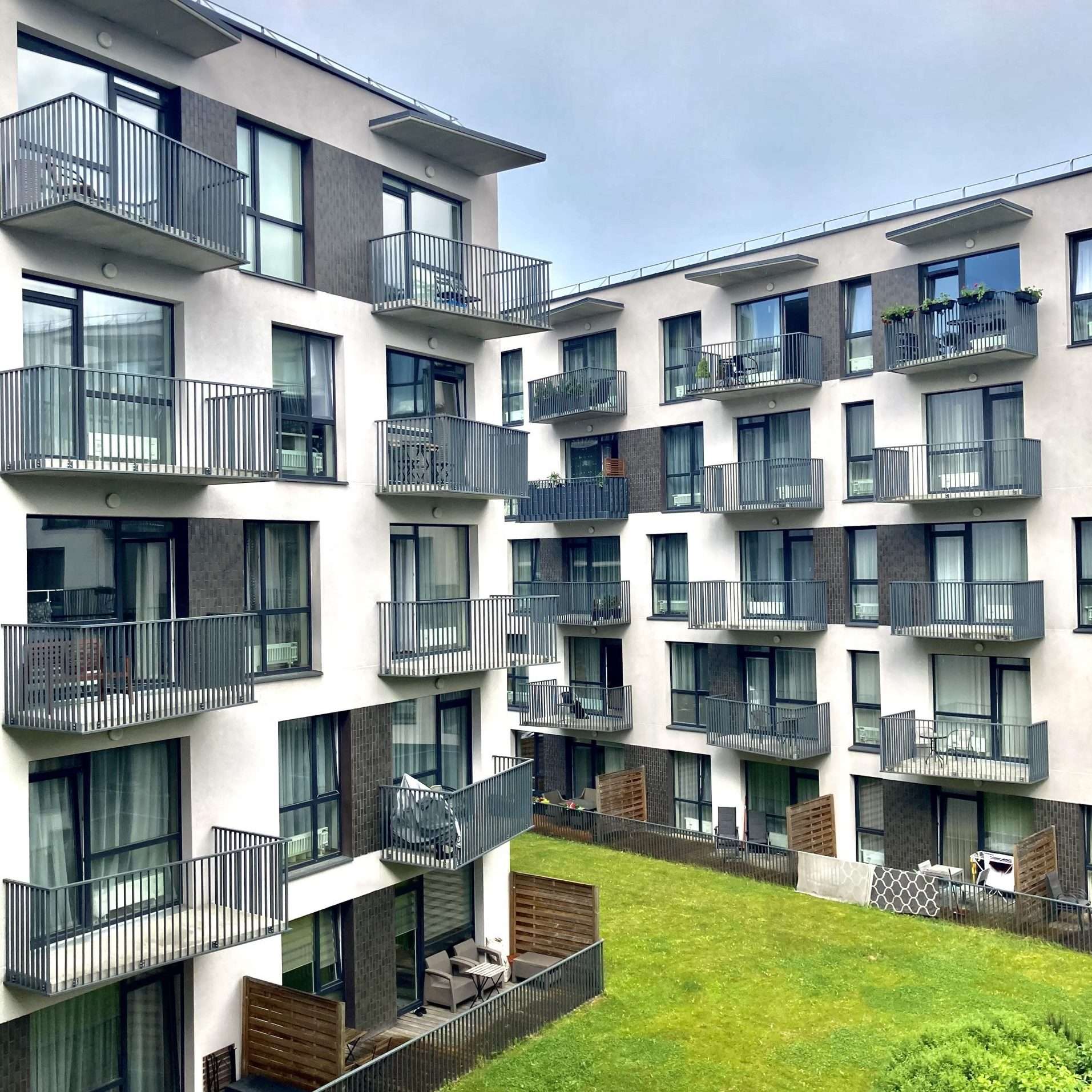
Underfloor heating in a newly built house with storefront windows
Situation and customer need
We were approached by clients who were installing a new house with large windows and high ceilings. The rooms are spacious, with lots of natural light, but at the same time this means greater heat loss in the cold season. The main challenge was to ensure even, comfortable heating without radiators under the windows and without a complex, expensive water system.
The customers were looking for a solution that:
- would not take up additional space in the interior;
- would be suitable as a main heating system;
- would allow for separate regulation of the temperature of different rooms;
- be quickly installed before the floor covering is laid.
Used system and technical solutions
In this project we installed infrared underfloor heating film under the future floor. Since no other heating system was planned for some of the premises, a heating film with a power of 80 W/m² was selected, which performs the function of the main heating.
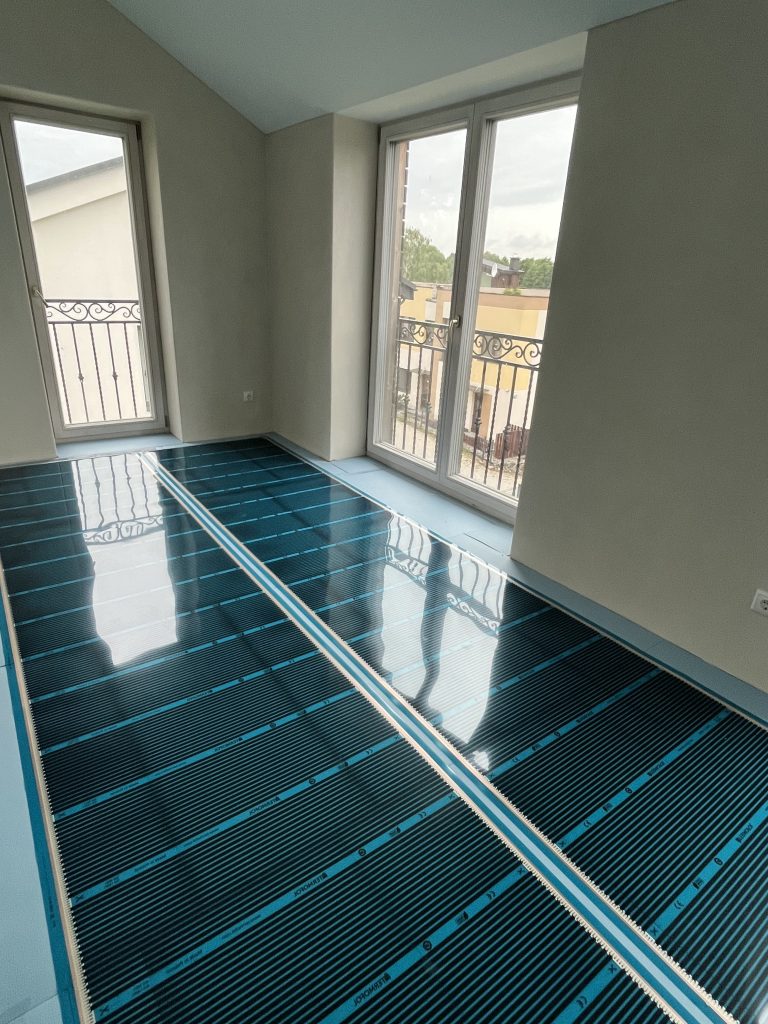
Electric underfloor heating was the optimal solution in this case because:
- heat is distributed evenly over the entire floor area;
- there are no cold zones near the display windows;
- no boiler, collector or pipelines required;
- The system is installed quickly and cleanly.
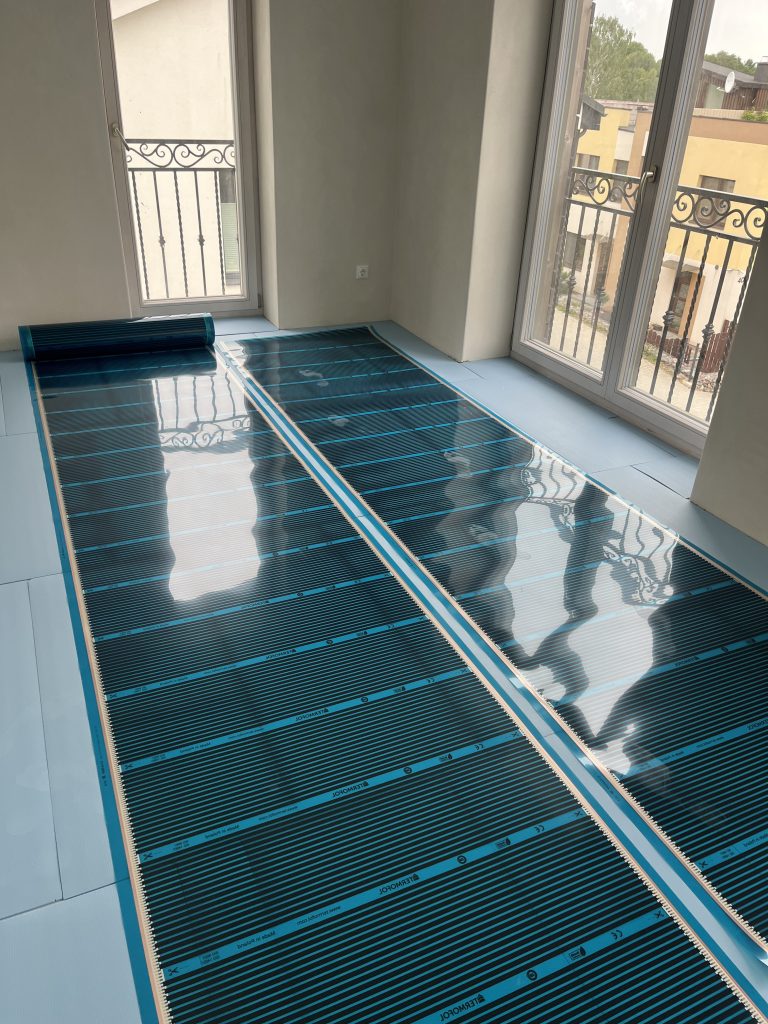
The photos show that the heating film is laid over the entire active floor area, leaving areas for furniture and stationary equipment. A heat-reflecting layer is laid under the film, which helps reduce heat loss to the ceiling and increases the efficiency of the system.
Management – in separate zones
The house has separate heating zones for each room. Each zone has a separate thermostat with floor temperature sensorThis allows:
- maintain different temperatures in the living room and bedrooms;
- reduce heating at night or when you are away;
- optimize electricity costs.
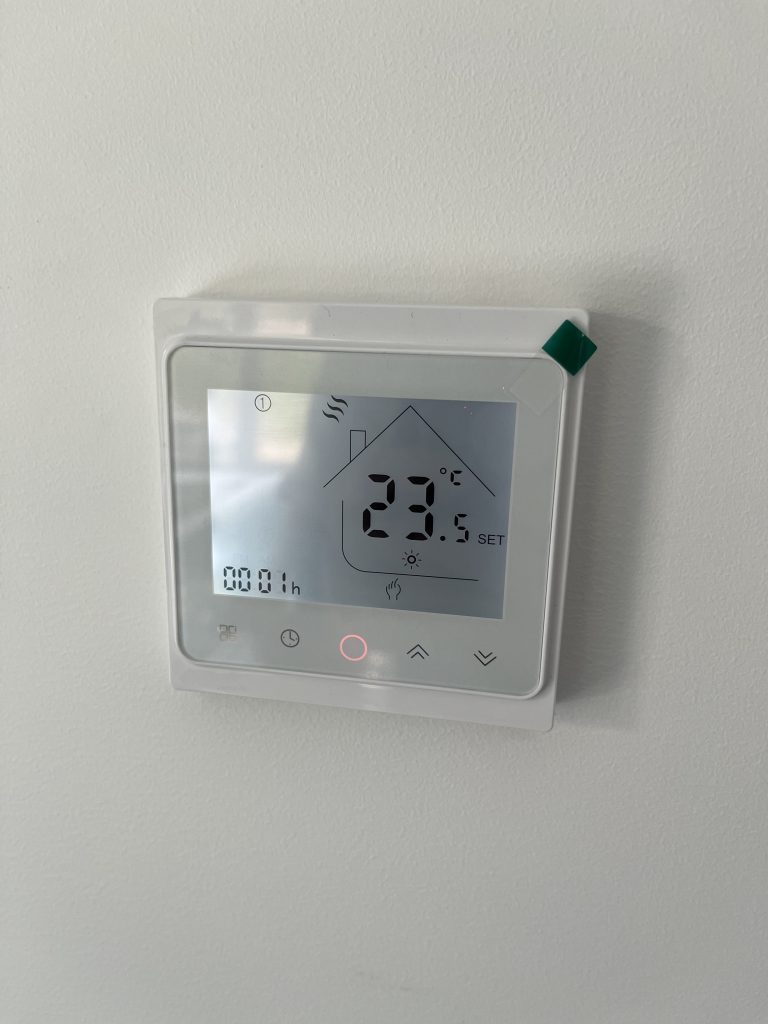
Modern thermostats allow you to set weekly schedules and precisely control the floor temperature. Such a system offers more flexibility than traditional central heating, where the temperature is regulated in a general way.
What problem did we solve?
Large display windows often cause discomfort in winter - you can feel the cold falling down, and the floor remains cool. Electric underfloor heating creates a "curtain" of heat across the entire floor area, so even near the windows remains a pleasant temperature.
In addition, by abandoning radiators:
- the interior becomes cleaner and more minimalist;
- there is more freedom for furniture arrangement;
- there is no need to match heating elements to design solutions.
Installation duration and progress
The installation of the heating film was carried out before the final floor covering was laid. The work was carried out in stages:
- The base has been prepared and a heat-reflecting layer has been laid.
- The infrared heating film is laid out and connected.
- Temperature sensors and thermostats are installed.
- The system was tested for functionality before covering with flooring.
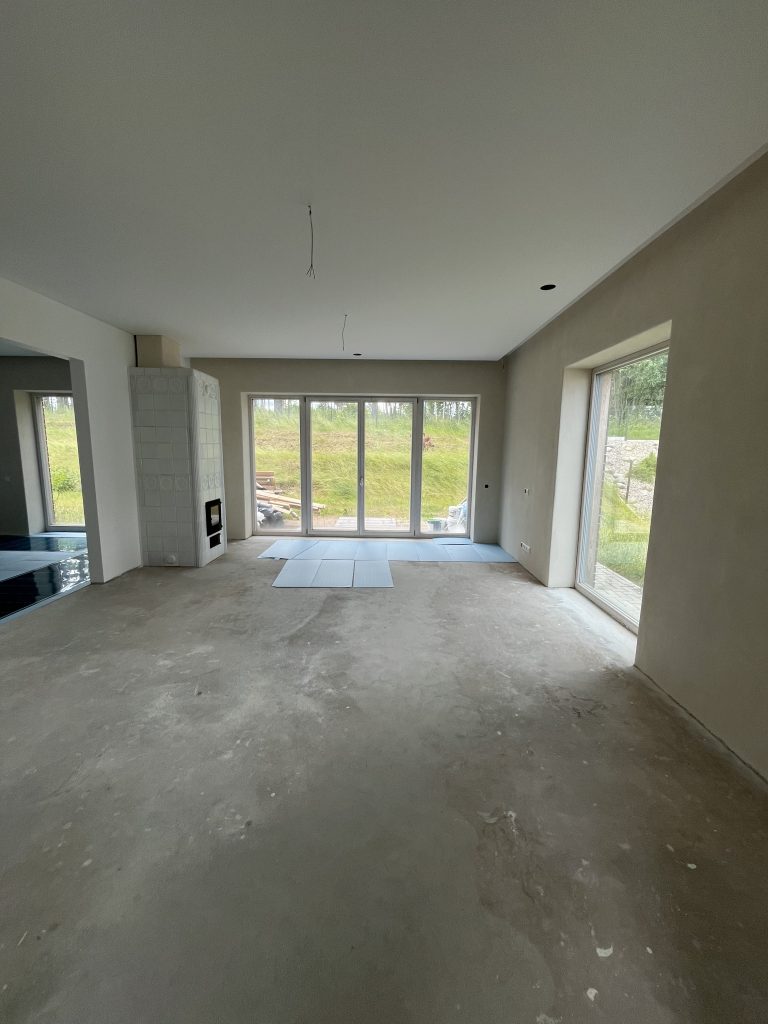
The entire system was installed quickly, without "wet" processes and long drying times, allowing for smooth continuation of finishing work.
Why is it worth choosing electric underfloor heating in a new house?
This project shows that electric underfloor heating can be not only an additional, but also a primary source of heat. This is especially relevant in newly built A+ or A++ class homes, where the heat demand is lower and energy efficiency is higher.
Main advantages:
- uniform and comfortable heating;
- the ability to control each room separately;
- simple and quick installation;
- no radiators and visible heating elements;
- lower installation costs compared to water underfloor heating in smaller facilities.